The scale of Indian democracy is staggering. With over 96 crore registered voters across 543 Lok Sabha constituencies and thousands of state assembly segments, the 2027 General Elections will once again be the largest democratic exercise in human history. But before that mega-event arrives, the 2026 assembly elections in states like West Bengal, Tamil Nadu, Kerala, Assam, Puducherry and several others are already reshaping the political landscape. Parties and candidates who begin their ground-level outreach now, rather than waiting for the official campaign window to open, consistently outperform those who scramble at the last minute.
Modern political campaigns have evolved far beyond rallies, pamphlets and door-to-door canvassing. Voters today communicate on WhatsApp, respond to voice calls, and expect personalised communication from candidates they support. Running a competitive 2026-27 campaign without purpose-built political campaign software is the equivalent of fighting a data-driven war with paper maps.
LeadNXT’s Political Campaign Management platform was built specifically for the Indian political context – multilingual voter databases, ECI-compliant outreach channels, booth-level coordination tools, and real-time analytics that show campaign managers exactly where their votes are coming from. This post walks you through every module, every use case, and every compliance requirement you need to understand before your campaign kicks off.
Why Political Campaigns Need Specialized Software (Not Generic CRM)
Generic CRM platforms like Salesforce or Zoho were designed for sales pipelines and customer lifecycles. They track leads, deals, and revenue. Political campaigns, however, operate on an entirely different model:
- The “customer” is a voter, not a paying client
- The “sale” is a vote, which happens once on a single day
- The database is structured around booths, wards, mandals, and constituencies – not industry verticals
- Compliance requirements come from the Election Commission of India, not data privacy laws alone
- Communication must happen in 22+ scheduled languages plus hundreds of regional dialects
- The campaign window is finite, intense, and non-repeatable
Generic tools cannot handle booth-level voter segmentation. They cannot enforce the 48-hour silence period automatically. They do not integrate with electoral rolls from the ECI. They have no concept of a “star campaigner” schedule or a polling agent coordination module.
Specialized political campaign tools India address these gaps from the ground up. They are built around the Electoral Roll as the master database, they treat booths as the atomic unit of ground planning, and they are designed to handle the explosive burst of activity that occurs in the final 72 hours before polling.
The ROI difference is not marginal. Campaigns that used specialized political software in the 2022-2024 state election cycles reported 3x improvement in volunteer coordination efficiency, 2.5x higher voter contact rates, and measurable improvements in booth-level turnout among targeted voter segments.
Core Modules of Political Campaign Software
A well-architected political campaign platform covers the full lifecycle from pre-election preparation through election day operations and post-election analysis.
Voter Database Module
The voter database is the foundation of every campaign strategy. It must support:
- Import and parsing of voter lists from ECI (PDF/Excel formats with OCR support)
- Deduplication and normalization of voter records across assembly segments
- Phone number append and validation against the voter name and address
- Segmentation by age group, caste, religion, gender, booth number, ward, and mandal
- Tagging voters as supporters, opposition, swing, or undecided based on field surveys
- Historical voting behavior mapping from past election data
Booth Management Module
India’s elections are won and lost at the booth level. The booth management module provides:
- Digital booth profiles with voter count, polling officer details, and physical address
- Booth-level task assignment for polling agents and volunteers
- Deficiency tracking – identifying booths with low supporter counts
- Booth strength scoring to prioritize resource allocation
- Real-time reporting on voter turnout percentage from the field
Volunteer Management Module
Large campaigns field thousands of volunteers across a constituency. The volunteer module handles:
- Volunteer registration with skill tags (driver, data entry, caller, booth agent)
- Zone and booth-wise assignment with digital attendance tracking
- Task allocation with deadline reminders via WhatsApp or SMS
- Performance dashboards for campaign managers at the state and district level
WhatsApp Outreach Module
WhatsApp penetration in India crossed 53 crore active users in 2025. The WhatsApp module enables:
- Approved template messages for campaign communication
- Broadcast lists segmented by booth, mandal, or voter profile
- Two-way chatbot conversations for voter queries
- Media-rich messages including candidate videos, rally invites, and manifesto PDFs
IVR Surveys Module
Interactive Voice Response surveys allow campaigns to gather voter opinion data at scale. The IVR module supports:
- Automated outbound calls with pre-recorded candidate voice messages
- DTMF-based voter responses (press 1 for satisfied, press 2 for issue-based questions)
- Multilingual IVR scripts for local language outreach
- Real-time response aggregation and reporting dashboard
Missed Call Verification Module
Missed call campaigns create a zero-friction opt-in channel for voter engagement. The module supports:
- Dedicated virtual numbers for each campaign or candidate
- Instant callback IVR triggered on missed call detection
- Lead capture and CRM integration for every missed call record
- Bulk SMS follow-up to missed call numbers with campaign information
Field Survey Module
Ground-truth data collection via field surveys powers smarter targeting. The module includes:
- Mobile-friendly survey forms for booth-level canvassers
- GPS-tagged survey submissions for geographic validation
- Voter sentiment tagging (strongly for, leaning, undecided, against)
- Door-to-door visit tracking and coverage heat maps
Sentiment Analysis Module
AI-powered sentiment analysis processes data from field surveys, social media mentions, and IVR responses to generate:
- Candidate approval ratings by ward and constituency
- Issue tracking – identifying the top 3-5 concerns for each voter segment
- Swing voter profiling for targeted last-mile outreach
- Trend alerts when sentiment changes significantly in a target segment
Multi-Channel Voter Outreach
Modern Indian voters are reached through multiple channels simultaneously. An effective voter outreach strategy layers several communication touchpoints to maximize engagement without overwhelming any single channel.
WhatsApp Messaging
WhatsApp is the single most effective channel for political communication in urban and semi-urban India. Approved campaign templates can deliver candidate introductions, rally notifications, manifesto highlights, and voting day reminders. Two-way chatbots handle voter queries about polling booth locations, voter ID issues, and candidate positions on local issues.
LeadNXT’s WhatsApp Business API platform supports WABA-approved political communication templates, bulk broadcast with real-time delivery tracking, and AI chatbot integration for 24/7 voter engagement.
For a deep-dive into WhatsApp campaign best practices, read our detailed post: WhatsApp Marketing in Political Campaigns.
Voice SMS (Pre-Recorded Voice Calls)
Voice SMS services deliver a pre-recorded message in the candidate’s own voice to thousands of voters simultaneously. This format is particularly effective in rural constituencies where literacy rates may affect SMS open rates. A 30-second voice message from a party president or popular local leader carries far greater emotional impact than a text message.
Bulk SMS
Bulk SMS remains a reliable, cost-effective channel for high-volume communication. It works across all mobile devices, including feature phones. SMS is used for rally invites, polling booth reminders, candidate profile sharing, and time-sensitive alerts during the campaign.
Missed Call Campaigns
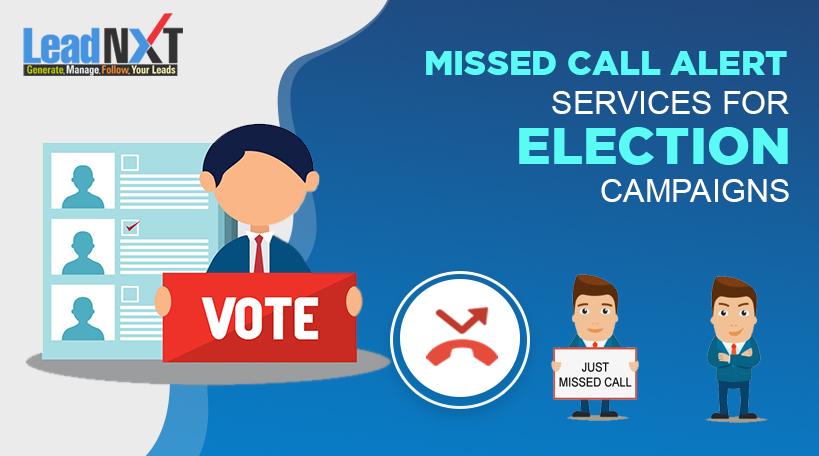
Missed call is the most inclusive channel in Indian political communication. Voters do not need a smartphone or data connection – they call a number, hang up, and the system captures their number and triggers an automatic callback or IVR. This creates a zero-cost engagement point for the voter while giving the campaign a verified, opted-in contact.
IVR Robo Calls
IVR political campaigns use automated outbound calls with candidate voice messages followed by interactive menus. Voters can register support, request information, report a local issue, or connect to a campaign representative – all within a single IVR call flow. This is especially powerful for party membership drives and voter opinion surveys.
Direct (Agent-Based) Calls
Trained telecallers making personal outreach calls to swing voters and high-value supporter lists represent the highest-impact, highest-cost channel. Campaign software integrates a predictive dialer with voter profiles so that each agent call is context-rich – the agent knows the voter’s booth, past engagement history, and any issues they’ve raised with the campaign.
How Missed Call Campaigns Drive Voter Engagement
Missed call campaigns occupy a unique position in the voter outreach toolkit because they reverse the typical communication dynamic. Instead of pushing messages to voters who may not be receptive, a missed call number creates a pull mechanism – voters who are already interested reach out first.
The Mechanics of a Missed Call Campaign
- The campaign publishes a dedicated missed call number across hoardings, pamphlets, TV ads, WhatsApp forwards, and social media
- An interested voter calls the number from their mobile
- The call disconnects automatically after 1-2 rings (the voter pays nothing)
- The campaign system captures the caller’s number in real time
- An automatic callback IVR is triggered within seconds, delivering the candidate’s voice message
- The voter is prompted to respond via DTMF to express support, register a query, or opt into WhatsApp updates
- All interactions are logged in the voter CRM for follow-up
Why Missed Call Works in India
- Zero cost to the voter – critical in rural and semi-urban areas
- Works on 2G feature phones – no smartphone or data required
- Creates a verified opt-in list – far more valuable than purchased lists
- Generates real-time engagement data without requiring the voter to fill a form
- Easily scalable – campaigns running missed call numbers have received lakhs of calls in a single day during peak campaign periods
For a comprehensive guide to missed call strategy, read our Missed Call Alert Services Guide and the dedicated post on Missed Call Services for Voter Engagement.
LeadNXT’s Missed Call Alert Service supports real-time missed call capture, instant IVR callback, and automated WhatsApp follow-up – all integrated into the voter CRM.
WhatsApp for Political Campaigns in India
India’s 2019 general elections were the first where WhatsApp played a decisive role in voter communication. By 2024, it had become the primary channel for grassroots political organizing, replacing the traditional panna pramukh (page coordinator) phone call networks of earlier decades.
WhatsApp Template Messages for Campaigns
The WhatsApp Business API requires pre-approved templates for broadcast messaging. Political campaigns use templates in several categories:
Voter Awareness Templates:
“[Candidate Name] will be visiting [Locality] on [Date] at [Time]. Join us at [Venue] to hear his vision for [Constituency]. Reply YES to confirm attendance.”
Rally Mobilization Templates:
“Namaskar! A grand public meeting is scheduled in your area. [Party Name] invites all supporters to attend. Location: [Venue]. Time: [Time]. [Party Logo Image].”
Polling Day Reminder Templates:
“Today is polling day! Your booth number is [X]. Remember to carry your Voter ID. Exercise your democratic right – [Party/Candidate] counts on your support.”
Issue-Based Engagement Templates:
“We hear you on [Local Issue]. Here is what [Candidate Name] has committed to doing in the first 100 days: [Policy Point]. Forward this to 5 supporters.”
Case Studies from Recent Indian Elections
2019 Lok Sabha – BJP IT Cell WhatsApp Network:
The ruling party’s technology team coordinated over 20 lakh WhatsApp group administrators covering nearly every panchayat in the country. Localized content in 12 languages was distributed daily through this network. The campaign reached voters in constituencies where traditional media had minimal reach.
2024 General Elections – Opposition INDIA Alliance Digital Strategy:
Multiple opposition parties used WhatsApp broadcast lists segmented by assembly segment to deliver candidate-specific messaging. AI-generated voice notes in regional languages were forwarded millions of times, demonstrating that WhatsApp’s forwarding mechanism can amplify reach beyond direct contact lists at zero additional cost.
State Elections 2024 (Maharashtra, Haryana):
Constituency-level WhatsApp command centers used chatbots to handle booth-level volunteer coordination. Polling agents sent turnout updates via WhatsApp to the command center, which generated real-time constituency-level dashboards visible to the campaign’s war room.
Our detailed analysis of Political Parties and Tech in 2026 Elections covers how WhatsApp strategy is evolving for the upcoming cycle.
Election Commission of India (ECI) Compliance
Running a compliant campaign is not just an ethical obligation – it is a legal requirement. Violations of ECI guidelines can result in campaign suspension, fines, and in serious cases, disqualification. Political campaign software must enforce compliance rules automatically, not rely on campaign managers to remember them manually.
The 48-Hour Silence Period
The Model Code of Conduct (MCC) prohibits all campaign activity 48 hours before the close of polling. This applies to:
- Public meetings and rallies
- Loudspeaker announcements
- Distribution of campaign materials
- Any form of canvassing by candidates or their representatives
For digital campaigns, the silence period extends to:
- WhatsApp broadcast messages related to the candidate or party
- IVR robo calls with political content
- Bulk SMS with vote solicitation content
- Voice SMS calls from candidate numbers
LeadNXT’s platform enforces the silence period through an automated broadcast lock that prevents any outbound campaign communication from being scheduled or triggered during the restricted window. Campaign managers receive a warning 72 hours before the cutoff and a hard lock activates automatically at the 48-hour mark.
Advertising Certification
Any paid political advertisement – print, electronic, or digital – requires certification from the ECI’s Media Certification and Monitoring Committee (MCMC) at the district and state level. Campaigns must:
- Submit pre-certification requests before publishing any paid content
- Maintain a log of all certified advertisements with costs
- Report advertisement expenditure in periodic expense statements to the Returning Officer
Election Expense Ceiling
The ECI sets a maximum expenditure limit for each candidate. In 2024, the limit was Rs 95 lakh per Lok Sabha candidate and Rs 40 lakh per assembly candidate (varying by state). All campaign expenses – including digital marketing, telecom costs for bulk SMS and IVR, WhatsApp API charges, and software subscriptions – must be logged in the official expense register.
LeadNXT provides itemized cost reports for all communication campaigns, compatible with the format required for election expense disclosure.
Data Privacy and DPDP Act Compliance
India’s Digital Personal Data Protection (DPDP) Act 2023 came into full force with its implementing rules in 2025. Political parties and campaigns that collect, store, or process voter personal data are subject to its provisions.
Key DPDP Obligations for Political Campaigns
Consent at Collection:
Every voter whose personal data is collected – whether through a missed call opt-in, a WhatsApp chatbot interaction, a field survey, or a website form – must provide valid, informed consent before their data can be used for campaign communication.
Purpose Limitation:
Data collected for campaign outreach cannot be repurposed for commercial use, sold to third parties, or retained beyond the campaign period without explicit voter consent for each new purpose.
Opt-Out Mechanism:
Every communication channel must provide a clear, friction-free opt-out option. For SMS campaigns, this is typically a STOP message. For IVR, it is a keypress option. For WhatsApp, it is a reply-based unsubscribe. LeadNXT’s platform enforces opt-out processing within 24 hours across all channels.
Data Retention Policy:
Voter contact data should be retained only for the duration of the campaign cycle. Post-election data purges should be documented and verifiable.
Cross-Border Data Restriction:
Voter personal data cannot be stored on servers outside India. LeadNXT operates exclusively on Indian data center infrastructure (AWS Mumbai, Azure Central India, and proprietary co-location facilities in Delhi NCR).
Children’s Data:
Voters must be 18 years or older. Campaign data collection systems must include age verification where applicable.
Voter Database Management
A political campaign is only as strong as its voter database. The difference between winning and losing a close election often comes down to who had better data – and who acted on it faster.
Electoral Roll Integration
The foundational dataset for any Indian campaign is the Electoral Roll (voters list) published by the ECI. The roll is available at the booth level in PDF format. LeadNXT’s platform includes:
- Automated PDF parsing and OCR for electoral rolls in all 28 states and 8 UTs
- Field extraction for voter name, relative name, voter ID number, address, gender, age, booth number, and ward
- Deduplication across rolls when voters appear in multiple constituency databases (migration tracking)
- Automatic field standardization for Hindi, Tamil, Telugu, Kannada, Malayalam, Bengali, Marathi, and Gujarati scripts
Phone Number Append
Electoral rolls do not include phone numbers by default. LeadNXT’s phone append service enriches the voter database with verified mobile numbers using:
- Proprietary telecom data partnerships covering 85%+ of Indian mobile subscribers
- Name and address matching algorithms trained on Indian naming conventions
- Verification layer that confirms number activity before adding to the database
- Confidence scoring so campaigns know which phone records are high-quality vs. approximate
Booth-Level Segmentation
India’s 10.35 lakh polling booths are the fundamental unit of election management. Effective booth-level segmentation allows campaigns to:
- Identify booths where the candidate’s party historically underperforms
- Prioritize booths with high proportions of swing voters for personalized outreach
- Match volunteers to their nearest booths for efficient canvassing
- Track the ratio of contacted to uncontacted voters at each booth
- Generate deficit lists – the number of additional votes needed per booth to ensure a win
For our detailed breakdown of election management systems, see: Election Management Software System 2026.
Real-Time Booth Management on Election Day
Election day is when all the pre-campaign preparation is tested under live conditions. Booth management on polling day is a high-stakes, time-sensitive operation that requires real-time data flows between the command center and hundreds of booth-level volunteers.
Live Turnout Tracking
LeadNXT’s booth management module enables:
- Polling agents to submit turnout counts via WhatsApp bot or SMS at 2-hour intervals
- Real-time aggregation of turnout data across all booths in a constituency
- Comparison of current turnout against target turnout to identify underperforming booths
- Instant alerts to zonal supervisors when a booth falls below the target percentage
Volunteer Coordination on Polling Day
- Digital attendance check-in for all polling day volunteers via mobile OTP
- Task assignment – voter list distribution, vehicle coordination, canteen management
- Emergency escalation for booth disruptions, EVM issues, or booth capture attempts
- Route optimization for vehicles ferrying elderly and disabled voters to polling stations
Supporter Mobilization in the Final Hours
Based on voter records tagged as confirmed supporters who have not yet voted (tracked via the turnout updates from polling agents), the platform triggers:
- WhatsApp reminder messages (within the 48-hour silence window restrictions on solicitation, these are limited to “don’t forget to vote” style neutral messages)
- Automated calls to supporter households via assigned volunteers
- Vehicle dispatches for voters who need assistance reaching the polling station
LeadNXT Political Campaign Suite
LeadNXT’s Political Campaign Management platform is an end-to-end suite designed specifically for Indian elections. It brings together every module described in this guide into a single, integrated system with a unified voter profile at its core.
Platform Architecture
- Central Voter CRM: Single record per voter aggregating electoral roll data, phone number, engagement history, survey responses, and supporter status
- Omnichannel Communication Engine: WhatsApp, IVR, voice SMS, bulk SMS, and missed call – all channels managed from one dashboard with unified delivery reporting
- Field Operations App: Android and iOS app for booth-level volunteers with offline sync capability for low-connectivity zones
- War Room Dashboard: Real-time constituency overview for senior campaign managers with drill-down to ward and booth level
- Compliance Control Panel: Automated silence period enforcement, expense tracking, and audit log generation for ECI disclosure
Technology Stack
- Cloud infrastructure on Indian data centers (100% DPDP compliant)
- AI-powered voter sentiment engine trained on Indian language datasets
- Telecom integrations with all major Indian carriers for optimal delivery rates
- 99.9% uptime SLA with disaster recovery – critical for election day operations
Integration Capabilities
- ECI Electoral Roll PDF import and parsing
- DLT platform registration for SMS (TRAI compliance)
- WhatsApp Business API (Meta-approved)
- Google Maps API for booth location and route planning
- REST API for integration with party’s existing IT systems
Support Model
Political campaigns run on unpredictable timelines. LeadNXT provides dedicated election campaign support with:
- 24/7 command center support during active election periods
- Dedicated campaign success manager for each constituency or state-level deployment
- On-site support available for major campaigns and war room setups
- WhatsApp-based real-time support channel for booth-level issues on polling day
Case Study: State Election Win with LeadNXT
Campaign: A mid-sized regional party contesting 85 assembly seats in a major Indian state (name withheld per client confidentiality agreement)
Election cycle: Q4 2024 state assembly elections
Challenge: The party had historically relied on traditional canvassing with limited data infrastructure. In the 2019 elections, they lost 23 seats by a margin of fewer than 5,000 votes each – seats that data-driven targeting could have flipped.
Deployment:
LeadNXT was engaged 90 days before the election. In phase one (first 30 days), the platform ingested voter rolls for all 85 constituencies, appended phone numbers for 68% of the voter base, and ran baseline IVR surveys to establish candidate approval ratings by ward.
In phase two (days 31-60), the campaign launched differentiated WhatsApp outreach to four voter segments: confirmed supporters (mobilization messaging), soft supporters (reinforcement messaging), undecided voters (issue-based content targeting their top-reported concerns), and soft opposition (negative comparison messaging focused on rival’s record).
A missed call number was promoted across 3,200 hoardings and 12 regional TV channels. The number received 4.2 lakh missed calls in 60 days, generating a verified opted-in contact base that became the campaign’s highest-priority outreach list.
In phase three (final 30 days), booth management went live with 12,000 registered volunteers assigned to booths digitally. On election day, turnout updates from 4,800 booths were flowing into the war room every 2 hours.
Results:
- 85% voter contact rate across all targeted constituencies (vs. 41% in the previous cycle)
- 12 additional seats won compared to the 2019 cycle in the same constituencies
- Average winning margin in close seats improved by 2,300 votes – directly attributable to the missed call opt-in list outreach in the final 15 days
- Expense reporting generated automatically from platform data, reducing the campaign’s compliance documentation burden by 80%
See the companion post on Election Campaign Missed Call Strategies for more case study detail.
Pricing for Political Campaigns
LeadNXT structures its political campaign pricing around the constituency as the unit of deployment, reflecting how Indian campaigns are budgeted and managed.
Constituency-Based Packages
Assembly Constituency Starter
- Single assembly segment (approx. 1.5-2.5 lakh voters)
- Voter database up to 2.5 lakh records with phone append
- WhatsApp broadcast, bulk SMS, missed call module
- Field survey app for up to 500 volunteers
- Standard war room dashboard
- ECI expense reporting
- 30-day deployment with 60-day support window
Assembly Constituency Pro
- Single assembly segment
- Full voter CRM with booth-level segmentation
- All communication channels including IVR surveys and voice SMS
- Volunteer management for up to 2,000 volunteers
- Real-time booth management with polling day war room
- Sentiment analysis and swing voter targeting
- Dedicated campaign success manager
Lok Sabha / District Package
- Covers 6-8 assembly segments within a Lok Sabha constituency
- All Pro features at scale
- Multi-constituency aggregated dashboard
- Zonal supervisor coordination layer
- On-site war room support option
- State-level party integration for coordinated messaging
State Election Enterprise
- Full state deployment across 50-200+ constituencies
- Custom pricing based on seat count and voter base size
- Dedicated infrastructure provisioning
- State-level command center dashboard
- Training program for district-level campaign managers
- Priority 24/7 support with guaranteed response time SLA
All packages are priced transparently and are reportable in ECI election expense disclosures as technology and communication costs.
Contact LeadNXT’s political campaign team for a custom quote based on your seat count, voter base size, and campaign timeline.
How to Choose Political Campaign Software
With several vendors offering campaign technology solutions, political parties and campaign managers need a structured evaluation framework. Use this checklist before making a decision:
Technical Evaluation Checklist
Data and Database
- [ ] Does the platform support direct import of ECI electoral rolls in PDF and Excel formats?
- [ ] Is there automated OCR and field extraction for Indian scripts (Hindi, regional languages)?
- [ ] Does it offer phone number append with Indian telecom data?
- [ ] Can voter records be segmented at the booth level natively?
Communication Channels
- [ ] Are WhatsApp broadcasts compliant with Meta WABA policies for political content?
- [ ] Is bulk SMS routed through DLT-registered senders (TRAI mandate)?
- [ ] Does the IVR module support multilingual scripts with regional language TTS or pre-recorded audio?
- [ ] Is missed call capture available with instant IVR callback?
Compliance
- [ ] Does the platform enforce the 48-hour silence period automatically with a broadcast lock?
- [ ] Are expense reports generated in a format compatible with ECI disclosure requirements?
- [ ] Is data stored exclusively on Indian servers (DPDP compliance)?
- [ ] Is there a clear opt-out mechanism across all channels?
Operational Reliability
- [ ] What is the platform’s stated uptime SLA? (Minimum 99.9% required for election day operations)
- [ ] Does the field operations app work offline for low-connectivity rural areas?
- [ ] Is there dedicated 24/7 support during election day?
- [ ] Has the vendor supported campaigns in your target state before?
Pricing and Transparency
- [ ] Is pricing quoted per constituency or per seat – compatible with how campaigns budget?
- [ ] Are all costs itemized for ECI expense disclosure?
- [ ] Is there a pilot or proof-of-concept option before full deployment commitment?
Red Flags to Avoid
- Vendors who cannot demonstrate prior Indian election campaign deployments
- Platforms that store voter data on overseas servers
- Solutions that do not have DLT-registered SMS pathways
- Vendors who cannot provide references from campaigns in your target state
- Platforms that require more than 2 weeks of setup time – campaigns move fast
Frequently Asked Questions
Q1: Is political campaign software legal to use in India?
Yes. Technology platforms for voter data management, communication, and campaign coordination are legal under Indian law, provided they comply with ECI guidelines (Model Code of Conduct, advertising certification, expense reporting), TRAI regulations (DLT registration for SMS, IVR), the DPDP Act 2023 (voter consent and data protection), and the Representation of the People Act provisions on election expenses. LeadNXT’s platform is built to comply with all applicable regulations.
Q2: How does the 48-hour silence period affect digital campaigns?
All solicitation-based communication must stop 48 hours before the close of polling. This means no WhatsApp messages urging votes, no IVR calls with candidate endorsements, no bulk SMS with party promotion, and no voice SMS from candidate numbers. Operational messages (such as neutral “remember to vote” reminders or logistical coordination for polling agents) may have different treatment – consult your campaign’s legal advisor for constituency-specific guidance. LeadNXT’s platform automates the broadcast lock 48 hours before your scheduled polling close time.
Q3: Can we use WhatsApp for political campaigns in India?
Yes, through the WhatsApp Business API with Meta-approved templates. Direct broadcast from personal WhatsApp accounts to groups of non-contacts is not WABA-compliant. Political communication templates must be approved by Meta and must comply with their political content policies. LeadNXT has pre-approved template libraries for common political campaign use cases and can assist with template submission and approval.
Q4: How many voters can the platform handle per constituency?
The platform has been load-tested to support voter databases of up to 50 lakh records per deployment. A typical assembly constituency has 1.5-3 lakh voters, and a Lok Sabha constituency has 12-25 lakh voters. For large-scale state election deployments, dedicated infrastructure is provisioned to ensure performance during peak periods.
Q5: Does LeadNXT integrate with Electoral Commission voter rolls?
Yes. The platform imports electoral rolls from ECI in PDF format (the standard format for voter list distribution to recognized political parties). OCR and field extraction automatically parse voter names, relative names, voter ID numbers, addresses, gender, age, and booth allocation. Indian scripts including Devanagari, Tamil, Telugu, Kannada, and Bengali are supported.
Q6: How does missed call work with voter privacy rules under DPDP?
When a voter calls a missed call number, they are initiating contact, which creates an implied consent basis for the immediate callback. For subsequent marketing communication, explicit consent must be captured – typically through an IVR keypress confirmation or a WhatsApp opt-in during the callback flow. LeadNXT’s missed call module includes this consent capture step and logs consent records with timestamps for DPDP compliance.
Q7: What languages does the platform support for IVR and WhatsApp?
IVR scripts are supported in all 22 scheduled languages of India plus major unscheduled regional languages including Bhojpuri, Rajasthani, and Chhattisgarhi. WhatsApp template messages can be submitted in any language. The voter database supports storage and search in both Romanized transliteration and native scripts. The field survey app’s UI is available in 12 languages.
Q8: How far in advance should a campaign start deploying political software?
Ideally 90 days before polling day. The first 30 days are used for data ingestion, phone append, and baseline surveys. Days 31-60 cover segmented outreach and volunteer recruitment. Days 61-90 are intensive multi-channel voter contact with real-time sentiment tracking. Campaigns starting with less than 60 days to polling can still benefit, but the phone append and database enrichment processes need a minimum of 2-3 weeks to complete. Contact LeadNXT immediately if your polling date is near.
Win Your 2026-27 Election with the Right Technology
India’s 2026 state elections and the approaching 2027 Lok Sabha cycle represent a decisive moment for political technology adoption. The parties and candidates who invest in purpose-built political campaign software for Indian elections now will enter the campaign period with significant structural advantages over those relying on spreadsheets, personal WhatsApp accounts, and disconnected tools.
LeadNXT has supported election campaigns across 18 Indian states. Our platform combines the voter database management, multi-channel outreach (WhatsApp, IVR, voice SMS, missed call), booth-level field operations, and ECI-compliant reporting that modern campaigns demand.
The election management software system that powers winning campaigns is not a last-minute purchase. It is a strategic investment that begins paying dividends from the first day of deployment – in better data, better volunteer coordination, and a higher voter contact rate than any traditional campaign operation can match.
Ready to win?
Schedule a free political campaign strategy session with the LeadNXT elections team. In a 45-minute call, we will review your target constituencies, your current data infrastructure, your campaign timeline, and the specific channels best suited to your voter base. You will receive a constituency-specific deployment recommendation and a transparent pricing proposal – no obligation.
Contact LeadNXT today at www.leadnxt.com/political-party-campaign-management/ or call our dedicated elections team. Because in Indian democracy, every booth counts – and the campaign that knows its booths best, wins.
LeadNXT is a registered technology service provider operating in compliance with TRAI, ECI, and DPDP regulations. All political campaign deployments are subject to applicable Election Commission guidelines and the Model Code of Conduct.
Related Articles

How to Build Voter Engagement with Missed Calls & IVR Services
When it comes to election campaigns, communication is no longer a one-way street. Voter Engagement…

How Political Parties Will Use Tech in the 2026 Elections
How Political Parties Will Use Tech in the 2026 Elections The 2026 elections in India…

How an Indian Startup Doubled Sales with LeadNXT
In India’s fast-paced startup ecosystem, achieving rapid sales growth is a dream for every founder.…