If your business still relies on text alone to reach customers in Bharat, you are leaving conversion rates and recall scores on the table. Voice SMS – also called OBD (Outbound Dialing) or voice broadcast – delivers a recorded audio message directly to a subscriber’s phone, plays automatically when the call is answered, and requires zero data connection or smartphone literacy on the recipient’s side. That last point is why voice broadcast remains the dominant mass-communication channel for India’s 600 million-plus Tier 2, Tier 3, and rural mobile users.
Yet despite widespread adoption across elections, banking, retail, education, and government health campaigns, bulk voice SMS cost in India is one of the least transparently published figures in the telecom industry. Quotes vary wildly – from INR 0.05 per pulse to INR 0.45 per pulse – and the difference usually hides in volume tiers, DLT compliance overhead, DTMF response capture, and language surcharges that providers prefer not to itemise upfront.
This 2026 guide cuts through that ambiguity. We cover every variable that drives outbound voice broadcast price in India, publish realistic per-pulse rate bands, compare voice SMS against bulk SMS and WhatsApp Business, walk through industry-specific pricing examples, and show you exactly what LeadNXT charges – with no hidden line items. By the end, you will know precisely what a 1 lakh voice blast should cost and how to pressure-test any quote you receive.
What is Voice SMS / OBD?
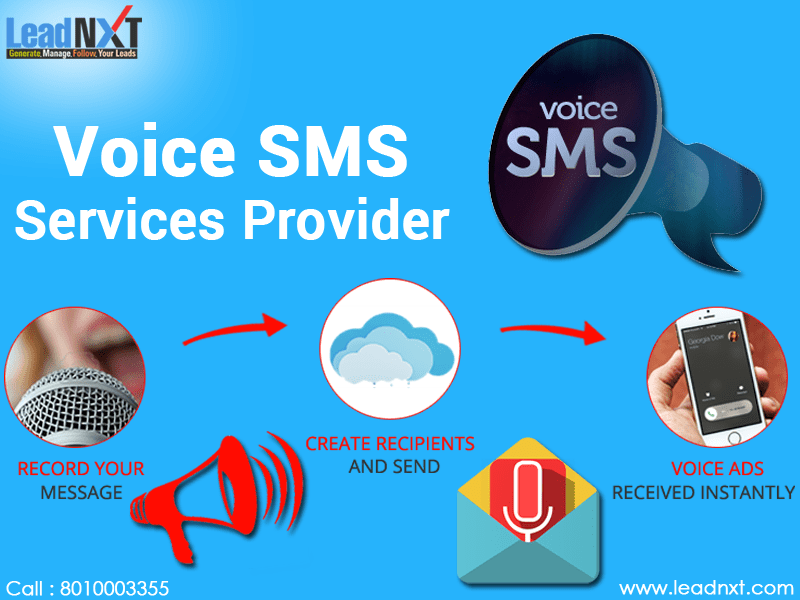
Voice SMS (sometimes written as voice-SMS or voice blast) is an automated telephony service that originates outbound calls from a cloud platform to a predefined list of mobile or landline numbers. When the called number is answered – by a human or an answering machine – the platform plays a pre-recorded audio clip or a text-to-speech (TTS) message and then either disconnects or waits for a DTMF keypad response.
The technical backbone is the same infrastructure used by enterprise IVR systems (see LeadNXT’s IVR Service for context), but pointed outward rather than inward. Three delivery models exist:
- Simple OBD (play and disconnect): Plays the message, ends the call. Cheapest mode.
- OBD with DTMF capture: Plays the message, waits for the user to press a key (e.g., “Press 1 to speak to an agent, press 2 to opt out”). Response data is logged or triggers a live agent transfer.
- OBD with callback / missed call integration: Works alongside a missed call alert service to create a two-step engagement funnel.
Voice SMS is regulated by TRAI under the Telecom Commercial Communications Customer Preference Regulations (TCCCPR) and requires DLT (Distributed Ledger Technology) registration – a compliance layer discussed in detail below.
Related reading: Top 10 Benefits of Voice SMS Services
How Voice SMS Pricing Works in India
Unlike data or text messaging where pricing is per message, voice SMS pricing in India is almost universally built around the concept of the pulse. Understanding the pulse model is essential before comparing any two vendor quotes.
Per-Pulse (30-Second Block) Billing
The most common billing unit in India is the 30-second pulse. A 20-second message costs 1 pulse. A 40-second message costs 2 pulses. An 85-second message costs 3 pulses. Most compliant voice messages for marketing land between 20 and 45 seconds, so the practical range is 1-2 pulses per call attempt.
Providers measure the pulse from the moment the call is answered (answered seconds), not from the dial attempt. Unanswered calls (busy, no answer, switched off) typically cost 0 pulses or a fractional “attempt fee” of INR 0.01-0.02, depending on the provider’s terms.
Per-Second Billing
A minority of premium providers – usually those targeting BFSI and enterprise clients – bill on a per-second basis. This is fairer for very short messages (under 15 seconds) but can be more expensive for standard 30-45 second clips because the per-second rate is often set higher than the per-pulse equivalent divided by 30.
Bundled Packs / Pre-Paid Credits
Most SMEs and political campaign buyers purchase pre-paid credit packs denominated in pulse counts rather than rupees. Example: a “5 lakh pulse pack” at INR 0.09/pulse = INR 45,000 upfront. Credits typically expire in 90-180 days. Rollover policies vary widely – always confirm before purchasing large volumes.
Post-Paid Enterprise Accounts
High-volume senders (above 25 lakh pulses/month) usually negotiate post-paid monthly billing with credit limits, consolidated invoicing, and dedicated account management. Rates at this tier can fall below INR 0.06/pulse for simple OBD.
Typical Voice SMS Price Bands in India 2026
The table below reflects realistic market rates as of early 2026 across the major provider tiers. These are per-pulse (30-second) rates for simple OBD in Hindi or English on all-India routes. Premium features like DTMF, live transfer, or regional language TTS carry surcharges detailed in the next section.
| Volume Tier (Pulses/Month) | Budget Providers | Mid-Range Providers | Premium/Enterprise Providers |
|---|---|---|---|
| Up to 50,000 | INR 0.18 – 0.30 | INR 0.15 – 0.22 | INR 0.20 – 0.30 |
| 50,001 – 2,00,000 | INR 0.12 – 0.18 | INR 0.10 – 0.15 | INR 0.13 – 0.20 |
| 2,00,001 – 10,00,000 | INR 0.08 – 0.12 | INR 0.07 – 0.10 | INR 0.09 – 0.13 |
| 10,00,001 – 50,00,000 | INR 0.06 – 0.09 | INR 0.05 – 0.08 | INR 0.07 – 0.10 |
| Above 50,00,000 | INR 0.04 – 0.07 | INR 0.04 – 0.06 | Negotiated |
Key observations:
- Budget providers often quote INR 0.05/pulse as a headline rate but apply it only above 50 lakh pulses with 6-month commitments.
- Mid-range providers like LeadNXT publish tiered rates publicly (see LeadNXT Voice SMS Services) and include DLT compliance support in the base price.
- Premium/enterprise providers justify higher rates with SLA-backed delivery, dedicated channel allocation, and real-time analytics dashboards.
For election campaigns and government tenders, aggregator rates negotiated through telecom operators (BSNl, Airtel, Jio, Vi channels) can go as low as INR 0.03-0.04/pulse at very high volumes, but these require formal vendor empanelment.
Pricing Factors Explained
The per-pulse rate is just the starting point. Six variables materially shift the final OBD voice broadcast pricing you pay in India.
1. Volume Tier
Already covered above – the single biggest lever. Committing to higher monthly or quarterly volumes unlocks the lowest rates. Negotiate quarterly minimums rather than monthly minimums to retain flexibility while still accessing bulk pricing.
2. Voice File Quality and Length
Providers transcode uploaded audio to a standard codec (usually G.711 or GSM 6.10 at 8 kHz). If your file is already in the correct format, processing is free. If you supply an MP3 or WAV at 44.1 kHz, some providers charge a transcoding fee of INR 50-500 per file. Files over 60 seconds that push into the 3-pulse bracket significantly increase per-call cost and also reduce answer rates (Indic audiences drop off after 45 seconds).
3. Language and Script
Hindi and English are considered standard and carry no surcharge on most platforms. Regional language audio files recorded by you also carry no extra charge per pulse. However, Text-to-Speech (TTS) in regional languages – Tamil, Telugu, Kannada, Marathi, Bengali, Gujarati, etc. – typically attracts a premium of INR 0.02-0.05/pulse on top of base rates, because providers license neural TTS voices from vendors like Google Cloud TTS or Microsoft Azure Cognitive Services.
4. DTMF Response Capture
Adding a keypress menu (even a single “Press 1 to opt in”) converts a simple OBD campaign into an interactive session. This adds:
- Platform processing overhead: INR 0.01-0.03 per answered call
- Extended call duration (wait time for keypress adds 5-15 seconds per call)
- Sometimes an additional per-response fee if data is routed to your CRM via webhook
DTMF-enabled campaigns typically cost 20-40% more than simple OBD campaigns of equivalent size.
5. Real-Time Analytics and Reporting
Basic delivery reports (attempted, answered, busy, not reachable) are included in all reputable providers’ base pricing. Advanced analytics – call recording playback, DTMF response heat maps, time-of-day answer rate curves, geographic drill-downs – may be bundled or sold as add-ons at INR 2,000-10,000/month.
6. Dedicated vs. Shared Dialer Infrastructure
Shared dialer infrastructure (CPS – calls per second) is standard for campaigns below 5 lakh pulses. Dedicated CPS allocation – where your campaign has reserved channel capacity – is priced at a premium but ensures consistent throughput for time-sensitive blasts like flash sales or election day GOTV (get-out-the-vote) calls. Dedicated channel allocation can add 10-25% to the effective per-pulse rate.
Voice SMS vs. Bulk SMS vs. WhatsApp: Cost Comparison
Choosing the right channel is as important as choosing the right pricing plan. Here is a realistic 2026 cost comparison for a 1 lakh (100,000) recipient campaign in India.
| Parameter | Voice SMS (OBD) | Bulk SMS (Transactional/Promotional) | WhatsApp Business API |
|---|---|---|---|
| Base rate per unit | INR 0.09 – 0.15/pulse | INR 0.10 – 0.18/SMS | INR 0.55 – 0.95/conversation (24h window) |
| Cost for 1 lakh recipients | INR 9,000 – 15,000 | INR 10,000 – 18,000 | INR 55,000 – 95,000 |
| DLT registration required | Yes (telemarketer + header) | Yes (telemarketer + template) | Yes (WhatsApp Business Account approval) |
| Literacy requirement | None – audio | Basic (reading) | Basic (reading) |
| Rich media support | Audio only | Text + URL | Images, video, PDF, buttons |
| Response/two-way | DTMF keypress | SMS reply (limited) | Full conversational |
| Typical open/answer rate | 60-80% answer rate | 15-30% read rate | 70-85% read rate |
| Opt-out compliance | NDNC / DND scrubbing | NDNC + DLT consent | WhatsApp opt-out |
| Best use case | Tier 2/3 outreach, elections, alerts | Transactional alerts, OTP | Urban engaged users, support |
Takeaway: For raw reach into non-smartphone or low-literacy India at the lowest cost per conversation initiated, voice SMS wins. For rich media engagement with urban users, WhatsApp Business API offers superior conversion. For transactional alerts at volume, bulk SMS remains the most cost-efficient channel. Smart campaigns blend all three based on the contact’s profile.
For a deeper comparison of cloud communication channels, see our guide on Cloud Telephony Solutions in India.
TRAI DND Compliance and Pricing Impact
No conversation about voice SMS cost in India is complete without covering TRAI’s TCCCPR framework and DLT compliance, both of which directly affect your effective cost per message.
DLT Registration Fees
As of 2026, every commercial voice SMS sender must be registered on the DLT (Distributed Ledger Technology) platform operated by telecom operators (Airtel, Jio, Vi, BSNL, Tata). Registration categories and one-time fees:
| Registration Type | Fee |
|---|---|
| Telemarketer (Principal Entity) | INR 5,900 (incl. GST) – one time |
| Header / CLI Registration | INR 590 per CLI number (one time) |
| Template Registration | Free for most operators |
| Annual renewal | INR 1,180 – 2,360 depending on operator |
If you use a provider like LeadNXT, DLT registration assistance is typically included, but the regulatory fee itself is passed through at cost.
DND Scrubbing
Before any promotional voice blast, numbers must be scrubbed against the National Do Not Disturb (NDNC/DND) registry. Providers run this scrub automatically, but there is a cost: you pay per pulse only for numbers that pass the DND filter. Typically 8-20% of any raw list gets filtered at DND scrubbing, which means your actual reach is lower than your upload count. Price this into your CPR (cost per reach) calculations.
Consent Framework
Post-2024 TRAI amendments require explicit digital consent for promotional voice calls to numbers registered on DND. Managing a consent database adds operational overhead. Providers offering consent management as part of their platform may charge INR 3,000-8,000/month for consent database hosting and audit logs.
Peak-Time Restrictions
TRAI prohibits commercial voice calls before 9:00 AM and after 9:00 PM. Some operators enforce this at the network level regardless of platform settings. Campaigns scheduled within the compliant window see better answer rates and avoid costly re-attempt cycles.
Industry Pricing Examples
Different sectors have distinct volume patterns, compliance requirements, and ROI expectations. Here is how voice SMS cost plays out across five major verticals in India.
Elections and Political Campaigns
Election campaigns remain the largest single-use case for OBD voice broadcast in India. A typical Lok Sabha constituency campaign for a single candidate runs 3-7 lakh calls per day during the final week. At INR 0.07-0.10/pulse on aggregator rates, a 5-day sprint of 5 lakh calls/day costs INR 1.75 lakh – 2.5 lakh. Celebrity voice messages, multi-language versions, and DTMF surveys add 20-30%.
BFSI (Banking, Financial Services, Insurance)
BFSI is the highest-compliance, highest-volume non-political segment. Common use cases: EMI payment reminders, policy renewal alerts, loan disbursement confirmations, and fraud alerts. Rates are typically mid-tier (INR 0.09-0.13/pulse) with premium analytics. A bank running 2 lakh reminder calls/day at 0.10/pulse spends INR 20,000/day or INR 6 lakh/month.
Retail and E-Commerce
Flash sale announcements, delivery alerts, and abandoned cart reminders. Campaigns are shorter but more frequent. Typical budget: INR 50,000-2 lakh per campaign. ROI is measured directly against sale uplift within 48 hours of the blast.
Education (EdTech and Schools)
Admission reminders, exam alerts, fee due notices, and parent communication. Volumes are moderate (10,000-50,000 calls per event). Budget providers in the INR 0.12-0.18/pulse range are common here. Multi-language capability (regional language + English) is essential.
Healthcare and Government
Appointment reminders, immunisation drive awareness, disease outbreak alerts (ASHA worker coordination). Government-funded campaigns often negotiate aggregator rates below INR 0.06/pulse. Private hospital chains typically pay INR 0.10-0.15/pulse with HIPAA-adjacent data handling clauses.
LeadNXT Voice SMS Pricing Plans
LeadNXT’s voice SMS services are built on a transparent, tiered pricing model with no setup fees for standard plans and no forced annual lock-in on starter packs. Here is the current published rate card for 2026:
| Plan Name | Pulse Volume | Rate per Pulse | Total Cost | Best For |
|---|---|---|---|---|
| Starter | Up to 25,000 | INR 0.15 | INR 3,750 | Pilots, small campaigns |
| Growth | 25,001 – 1,00,000 | INR 0.12 | INR 12,000 (1L) | SMEs, regional retail |
| Business | 1,00,001 – 5,00,000 | INR 0.09 | INR 45,000 (5L) | Mid-market, BFSI |
| Scale | 5,00,001 – 20,00,000 | INR 0.07 | INR 1,40,000 (20L) | Enterprises, EdTech |
| Enterprise | Above 20,00,000 | Custom (from INR 0.05) | Negotiated | Elections, large BFSI |
What is included in every LeadNXT plan:
- DLT registration guidance and template assistance
- DND scrubbing before every campaign run
- Real-time delivery dashboard (answered, busy, not reachable, unanswered breakdowns)
- Basic DTMF capture (up to 1 keypress level) at no extra charge on Growth plan and above
- Hindi and English audio support
- API access for CRM integration
- 30-day credit validity on Starter; 90-day on Growth and above
Optional add-ons:
- Regional language TTS: INR 0.03/pulse additional
- Multi-level DTMF IVR tree: INR 5,000 one-time setup
- Live agent transfer on keypress: priced per transfer (INR 1.50-3.00 per successful transfer)
- Dedicated CPS allocation: 20% premium on base rate
- Extended credit validity (180 days): INR 999/pack
- Campaign scheduling and A/B split testing module: INR 2,500/month
For a custom quote on volumes above 20 lakh pulses, contact the LeadNXT enterprise team directly through the voice SMS services page.
Hidden Costs and Gotchas
Responsible buyers should ask about every item on this list before signing a vendor agreement.
1. GST on Top of Quoted Rate
All voice SMS pricing in India is subject to 18% GST. A quoted rate of INR 0.09/pulse becomes an effective INR 0.1062/pulse post-tax. Always clarify whether quotes are inclusive or exclusive of GST.
2. Attempt Fees on Unconnected Calls
Some providers charge INR 0.01-0.02 per dial attempt even when the number is busy, switched off, or not reachable. On a campaign with 30% non-connect rate, this adds 0.006 – 0.012 to your effective per-pulse cost. Ask: “Do you charge for unanswered attempts?”
3. Audio File Rejection After Payment
If your pre-recorded audio file violates TRAI content guidelines (no unauthorized brand names, no misleading claims, mandatory opt-out disclosure), the file gets rejected after DLT template review – after you have loaded credits. Clarify the content review process and timelines before crediting your account.
4. CLI Number Pooling vs. Dedicated CLI
Shared CLI pools mean recipients see different numbers on different calls, which reduces callback rates and brand recall. Dedicated CLIs cost more (INR 590+ per number registration) but significantly improve trust and callback conversion.
5. Report Accuracy and Billing Reconciliation
Some providers bill on attempted pulses rather than answered pulses. If a 45-second message counts as 2 pulses and gets answered for only 10 seconds (user hung up), you still pay for 2 pulses in some contracts. Read the billing definition of “pulse” carefully.
6. Campaign Scheduling Fees
A few budget providers charge INR 500-2,000 to schedule campaigns for specific time windows rather than immediate execution. This should be a standard feature at no extra cost.
7. Data Export and Storage Fees
Campaign response data (especially DTMF logs) may be stored for only 7-30 days by default. Extended data retention or bulk export to CSV/API can attract charges. If you need long-term audit trails for compliance, confirm the retention policy upfront.
Promotional vs. Transactional Voice SMS
TRAI’s TCCCPR framework – mirroring the distinction in bulk SMS – divides voice SMS campaigns into two regulatory categories. Understanding the difference affects both compliance cost and effective pricing.
Promotional Voice SMS
- Definition: Messages promoting a product, service, offer, or event to recipients who may or may not be customers.
- Permitted hours: 9:00 AM to 9:00 PM only.
- DND applicability: Cannot be delivered to DND-registered numbers without explicit prior consent.
- DLT requirement: Registered telemarketer + registered header/CLI + approved content template.
- Typical use: Flash sale alerts, election campaigns, event invitations, loan offers.
Transactional Voice SMS
- Definition: Messages conveying information relevant to an existing relationship or transaction – OTP confirmation calls, appointment reminders, delivery alerts, EMI due notices.
- Permitted hours: 24×7 (no time restriction).
- DND applicability: Exempt from DND filter if message is genuinely transactional.
- DLT requirement: Registered entity + transactional template approval.
- Typical use: Bank transaction alerts, hospital appointment reminders, flight delay notifications, utility outage alerts.
Pricing difference: Transactional voice SMS typically commands a slight premium over promotional on shared platforms because it requires higher delivery SLA and 24×7 routing. Expect INR 0.01-0.03/pulse more than equivalent promotional rates.
If your campaign could plausibly fall into either category, classify it as promotional to stay safe with TRAI. Misclassifying promotional content as transactional is a significant regulatory risk post-2024 amendments.
ROI Calculator Example
Let us run a concrete ROI calculation for a mid-size retail brand planning a Diwali campaign using voice SMS.
Campaign parameters:
- Target audience: 2,00,000 existing customers (past 12-month purchasers)
- Message: 35-second Hindi audio announcing an exclusive 20% off voucher code
- Provider: LeadNXT Business Plan
- Rate: INR 0.09/pulse (1 pulse per call, 35 seconds)
- DND filter removal: assume 15% filtered = 1,70,000 deliverable calls
Cost breakdown:
| Line Item | Amount |
|---|---|
| Voice pulses (1,70,000 x INR 0.09) | INR 15,300 |
| GST @ 18% | INR 2,754 |
| Audio file production (one-time) | INR 3,000 |
| DLT template registration (one-time) | INR 590 |
| Total campaign cost | INR 21,644 |
Revenue model (conservative):
- Answer rate: 65% = 1,10,500 people hear the message
- Voucher redemption rate: 4% = 4,420 redemptions
- Average order value: INR 1,800
- Revenue from campaign: 4,420 x INR 1,800 = INR 79,56,000
- Gross margin @ 35%: INR 27,84,600
ROI:
- Net profit from campaign: INR 27,84,600 – INR 21,644 = INR 27,62,956
- ROI: (INR 27,62,956 / INR 21,644) x 100 = 12,766%
Even in a pessimistic scenario – half the answer rate and half the redemption rate – the campaign returns INR 6,99,600 in margin against a spend of INR 21,644, giving a 32x return. This is why voice SMS remains a staple channel for Indian retail despite being a “traditional” technology.
For combined channel strategies pairing voice SMS with missed call triggers, read our detailed walkthrough on Missed Call Alert Services.
Frequently Asked Questions
1. What is the minimum order for voice SMS in India in 2026?
Most providers, including LeadNXT, allow starting from as few as 1,000 pulses, though the per-pulse rate at that volume can be INR 0.20-0.30. For meaningful campaigns with statistically valid results, a minimum of 10,000-25,000 pulses is advisable.
2. Is voice SMS legal in India? Do I need TRAI registration?
Yes, voice SMS for commercial purposes is legal in India and regulated by TRAI under TCCCPR 2018 (amended through 2024). You must register as a Principal Entity (Telemarketer) on the DLT platform of at least one major telecom operator. LeadNXT assists with DLT onboarding as part of the service setup.
3. How long does it take to launch a voice SMS campaign?
With DLT registration already in place and an approved audio file ready, a campaign can go live within 2-4 hours on LeadNXT’s platform. If you are starting from scratch including DLT registration, allow 3-5 business days for entity and header approval.
4. Can I target specific states or cities with voice SMS?
Yes. If your contact database includes geographic segmentation (state, city, PIN code), you can run state-specific or city-specific campaigns. Some providers also offer carrier-level regional routing, though this is primarily useful for managing CPS at very high volumes rather than geographic targeting per se.
5. What is the difference between OBD and IVR?
OBD (Outbound Dialing) originates calls from the platform to your contacts. IVR (Interactive Voice Response) handles inbound calls from customers who dial your number and navigate a menu. They share the same underlying telephony infrastructure but serve opposite directions. LeadNXT offers both – see the IVR service page for inbound IVR pricing.
6. What file format should my audio be in for voice SMS?
Most platforms accept MP3 (128 kbps or higher), WAV (PCM, 8 kHz or 16 kHz, mono), and OGG. The platform transcodes to G.711 for network delivery. For best quality on mobile networks, record in a quiet environment at 16 kHz mono WAV, keep the message under 45 seconds, and maintain a steady pace of 120-140 words per minute.
7. How are unanswered or busy calls handled in pricing?
This varies by provider. LeadNXT does not charge for calls where the recipient’s phone is switched off, permanently unreachable, or where the call is rejected before answering. For busy signals, a single free retry is included in standard plans after a configurable gap (typically 15-30 minutes). Only answered calls consume pulse credits.
8. Can voice SMS be used for OTP or authentication calls?
Yes, voice OTP (a synthesised or recorded voice reading a one-time password) is a valid use case, especially for customers without a reliable SMS connection. It is classified as transactional and thus exempt from DND restrictions. Rates are similar to standard transactional OBD. For high-frequency OTP campaigns (above 5 lakh calls/month), dedicated CLI allocation is strongly recommended to prevent CLI-level blacklisting by telecom operators.
Get Started with LeadNXT Voice SMS
Voice SMS is not a legacy channel. For 700 million Indians who may never read a marketing email, open a WhatsApp notification, or browse a digital ad, a well-timed voice call in their own language remains the highest-reach, highest-impact communication tool available to your brand.
The pricing landscape in 2026 is more competitive and more transparent than ever – but only if you know what questions to ask. With per-pulse rates starting at INR 0.05 for large volumes, DLT compliance now streamlined through platform-assisted registration, and DTMF response capture enabling two-way engagement at scale, the barriers to running an effective voice broadcast campaign have never been lower.
LeadNXT’s voice SMS services are designed to give Indian businesses – from bootstrapped startups to listed enterprises – a compliant, scalable, and honestly priced entry point into mass voice communication. There are no hidden setup fees, no surprise attempt charges, and no confusing pulse definitions buried in fine print.
For a deeper dive into how cloud telephony pricing fits into your overall communication stack, read our guide on SMS Marketing in 2026 and the complete Cloud Telephony Solutions India overview.
Ready to price out your next campaign? Contact the LeadNXT team today for a volume-specific quote – and ask for a free 1,000-pulse trial to validate delivery rates on your contact list before committing to a full campaign budget.
Related Articles

Best Cloud Telephony Provider in Mumbai 2026: Top 7 Compared
Mumbai never sleeps – and neither do the phones. As India’s financial nerve centre, commercial…

Toll-Free Number Services in India: The Ultimate Business Guide (2026)
Losing a customer because they hesitated to call you is a hidden cost most businesses…

Cloud Telephony Solutions in India: The Ultimate 2026 Guide for Business Communication
India’s business communication landscape is undergoing a massive transformation. From startups in Bengaluru to large…