How Political Parties Will Use Tech in the 2026 Elections
The 2026 elections in India will not be fought only on stages, rallies, and door-to-door campaigns. They will be fought on dashboards, phone calls, missed calls, data centers, and real-time analytics screens. Technology is no longer a “support system” for political campaigns-it is the backbone.
From voter outreach to booth-level monitoring, political parties are rapidly shifting from intuition-based campaigning to data-driven election management. The parties that win in 2026 will be the ones that understand voters deeply, communicate consistently, and react faster than their competitors-and technology makes all of this possible.
In this blog, we’ll explore how political parties will use technology in the 2026 elections, with a special focus on IVR campaigns, missed call engagement, real-time voter analytics, and why Election Management Software and Political Campaign Services in India are becoming non-negotiable.
The New Reality of Indian Elections
India’s electorate is massive, diverse, and digitally connected like never before. Voters today expect:
- Instant information
- Personalized communication
- Continuous engagement, not just election-time promises
Traditional methods like posters, loudspeakers, and rallies still matter-but they are no longer enough. Campaigns now need scale + personalization, and that combination is only possible with technology.
By 2026, every serious political party will operate like a tech-enabled organization:
- Dedicated tech war rooms
- Voter databases updated in real time
- Automated communication systems
- Data analysts tracking sentiment daily
Election Management Software: The Command Center of Campaigns
At the heart of modern political campaigns lies Election Management Software. Think of it as a centralized brain that connects every campaign activity.
What Election Management Software Will Handle in 2026
- Voter database management (demographics, issues, preferences)
- Booth-level data tracking
- Volunteer and worker coordination
- Communication logs (calls, SMS, IVR, WhatsApp)
- Real-time performance dashboards
Instead of scattered Excel sheets and manual reports, political parties will rely on a single unified platform to monitor their entire campaign-state-wise, constituency-wise, and even booth-wise.
Why This Matters
In fast-moving elections, decisions must be made quickly:
- Which constituency needs more outreach?
- Which message is resonating with youth or women voters?
- Where is opposition gaining momentum?
Election Management Software enables leaders to act on facts, not guesswork.
IVR Campaigns: Reaching Voters at Scale
One of the most powerful tools in the 2026 elections will be IVR (Interactive Voice Response) campaigns.
Why IVR Works So Well in Indian Politics
India is multilingual and diverse. Not every voter is comfortable with apps or long text messages, but everyone understands a phone call.
IVR campaigns allow parties to:
- Deliver voice messages in local languages
- Reach rural and semi-urban voters effectively
- Communicate directly from party leaders’ voices
- Scale communication to lakhs or crores of voters
How Political Parties Will Use IVR in 2026
- Leader Voice Messages
Pre-recorded messages from party leaders addressing voters by region or issue.
- Issue-Based IVR Surveys
“Press 1 if employment is your top concern, Press 2 for healthcare…”
This gives instant insight into voter priorities.
- Reminder Calls
Polling day reminders, rally invites, and volunteer coordination.
- Two-Way Engagement
Voters can respond, leave feedback, or request callbacks-making campaigns interactive rather than one-sided.
IVR will no longer be just a broadcast tool-it will become a listening channel.
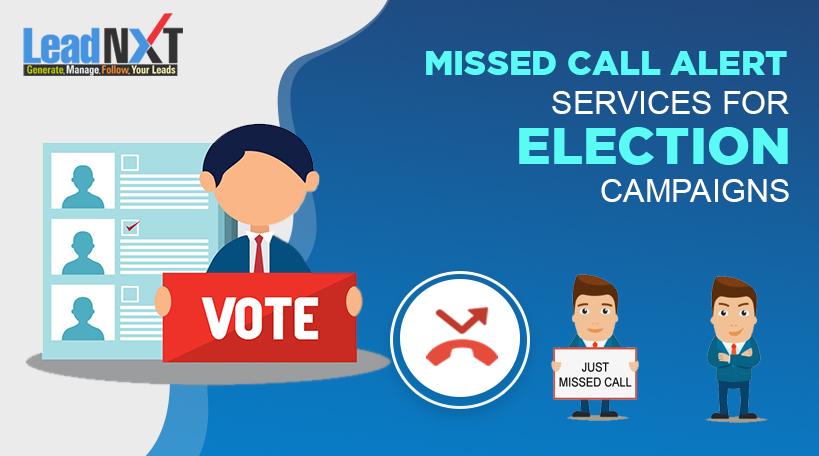
Missed Call Engagement: Small Action, Big Impact
Missed call campaigns have already proven their effectiveness in Indian elections-and in 2026, they will be smarter and more strategic.
Why Missed Calls Are So Powerful
- Zero cost for voters
- Simple action-no app, no form
- Works across urban and rural areas
- High participation rates
Advanced Use of Missed Call Campaigns
In 2026, missed call numbers won’t just collect phone numbers. They will trigger automated workflows:
- Auto-callback via IVR with a welcome message
- SMS or WhatsApp follow-ups with personalized content
- Tagging voters based on location and interest
- Adding voters directly to CRM and analytics systems
For example:
“Give a missed call to support clean governance in your constituency.”
Within seconds, the system can:
- Register the voter
- Capture constituency data
- Send relevant messages
- Assign the lead to a local campaign worker
Missed calls will act as entry points into long-term voter engagement funnels.
Real-Time Voter Analytics: From Guesswork to Precision
One of the biggest changes in the 2026 elections will be the use of real-time voter analytics.
What Is Real-Time Voter Analytics?
It’s the ability to:
- Track voter responses as they happen
- Analyze sentiment across regions
- Monitor campaign effectiveness daily
- Identify swing areas instantly
Instead of waiting for post-campaign surveys, parties will know today what is working and what isn’t.
Data Sources Feeding Analytics
- IVR responses
- Missed call interactions
- SMS and WhatsApp engagement
- Ground worker reports
- Social sentiment inputs
All this data flows into analytics dashboards that show:
- Voter mood trends
- Issue-wise heatmaps
- Supporter vs undecided ratios
- Volunteer performance
This level of visibility allows political parties to course-correct instantly.
Booth-Level Microtargeting Will Define Winners
Mass messaging is no longer enough. The 2026 elections will be won at the booth level.
With advanced Election Management Software and analytics, parties can:
- Customize messages for each booth
- Assign local volunteers based on voter profiles
- Track turnout probabilities
- Focus resources where margins are thin
For example:
- One booth may need youth-focused messaging
- Another may need women-centric welfare communication
- Another may require caste or occupation-based outreach
Technology makes this microtargeting scalable and measurable.
Political Campaign Services in India: From Vendors to Strategic Partners
As campaigns become more complex, political parties are increasingly relying on professional Political Campaign Services in India.
What Modern Campaign Service Providers Offer
- End-to-end election technology platforms
- IVR and missed call infrastructure
- Voter CRM and analytics
- Call center and volunteer management systems
- Compliance-ready communication tools
These are not just tech vendors-they are strategic partners who understand elections, voters, and ground realities.
In 2026, political parties that work with experienced campaign technology partners will have a clear advantage over those trying to manage everything in-house.
Transparency, Speed, and Accountability
Technology also brings accountability:
- Every call is logged
- Every interaction is tracked
- Every decision is data-backed
This transparency helps party leadership:
- Monitor campaign teams
- Reduce inefficiencies
- Optimize budgets
- Ensure consistent messaging
In an era where elections move fast and scrutiny is high, this operational clarity is invaluable.
Challenges Political Parties Must Prepare For
While technology offers massive advantages, it also brings challenges:
- Data privacy and compliance
- Managing large-scale infrastructure reliably
- Training volunteers and workers
- Avoiding over-automation that feels impersonal
Successful campaigns will balance technology + human touch.
The Future Is Tech-Driven-and It’s Already Here
The 2026 elections will mark a turning point in Indian political campaigning. IVR campaigns, missed call engagement, real-time voter analytics, and robust Election Management Software will no longer be optional-they will be essential.
Political parties that invest early in modern Political Campaign Services in India will:
- Understand voters better
- Communicate more effectively
- Respond faster to ground realities
- Build stronger, long-term voter relationships
Those who ignore technology risk being invisible in a highly competitive electoral landscape.
Final Thoughts
Elections are ultimately about people-but technology is how you reach, understand, and mobilize those people at scale. The winners of the 2026 elections won’t just have strong ideologies or leaders; they will have strong systems.
If your campaign strategy still relies only on rallies and posters, it’s time to rethink. The future of elections is digital, data-driven, and deeply personalized-and that future is unfolding right now.
Want to build a tech-powered political campaign?
LeadNXT provides advanced Election Management Software, IVR solutions, missed call systems, and end-to-end Political Campaign Services in India to help parties win smarter, not harder.
Recommended Reading
Explore our complete guides for a deeper understanding:
- Cloud Telephony Solutions in India: The Ultimate 2026 Guide
- Missed Call Alert Service for Business: The Complete Guide
LeadNXT Services:
Related Articles
Best Election Management Software in India 2026: Top 7 Platforms Compared
Indian democracy runs on scale that most of the world cannot comprehend. Over 96 crore…
Missed Call Alert Service for Election Campaigns
Unlock the Power of Missed Call Services with LeadNXT Missed Call Alert Services are transforming…
Election Management System
Vote-casting In India India is a democratic country, it has a federal system for vote-casting,…