
Introduction
Every day, thousands of Indian sales teams fight the same battle — a prospect calls, drops a WhatsApp message, or fills a web form, and then quietly disappears. Not because they were not interested, but because nobody followed up in time. The salesperson was juggling 40 leads on a spreadsheet, forgot a callback, or had no visibility into where each prospect stood in the pipeline.
This is the quiet revenue leak that kills growth in Indian SMBs and startups.
Manual lead management — built on Excel sheets, WhatsApp groups, and scattered notes — worked when your team had 10 leads a week. In 2026, with multi-channel digital campaigns generating hundreds of inquiries simultaneously, it is a recipe for lost business. Studies consistently show that sales teams that follow up with a lead within the first hour are 7X more likely to qualify them. Yet most businesses without a CRM take 24–48 hours or longer to respond.
The solution is a purpose-built CRM lead management system — a platform that captures every lead automatically, scores it, assigns it to the right salesperson, tracks every interaction, and nudges your team to follow up at the right moment.
This guide explains everything Indian businesses need to know to evaluate, choose, and deploy the right CRM in 2026.
What Is CRM Lead Management?
CRM (Customer Relationship Management) lead management is the process of capturing, organizing, prioritizing, tracking, and converting prospective customers using a centralized software platform. It bridges the gap between marketing activity (generating inquiries) and sales activity (closing deals) by creating a structured, data-driven pipeline.
A modern CRM lead management system does far more than store contact information. It:
- Captures leads automatically from every source — web forms, landing pages, social media, inbound calls, chat widgets, and third-party portals like JustDial or Sulekha.
- Scores and qualifies leads based on behavior, demographics, and engagement signals so your team focuses on the hottest prospects first.
- Routes leads intelligently to the right salesperson based on geography, product interest, or availability, eliminating manual assignment delays.
- Tracks every touchpoint — calls, emails, WhatsApp messages, meetings — in a single, chronological view.
- Automates follow-up sequences so no lead goes cold due to human oversight.
- Generates reports that show conversion rates, pipeline value, team performance, and bottlenecks.
In essence, CRM lead management transforms a chaotic, person-dependent process into a predictable, scalable system. It answers two critical questions at any given moment: “Where is each lead in the buying journey?” and “What needs to happen next to move it forward?”
For Indian businesses operating in highly competitive markets — where a competitor is just one Google search away — this kind of structural advantage can be the deciding factor between stagnation and scale.
Why Indian Businesses Need a CRM in 2026
India’s digital economy has fundamentally changed how buyers discover and evaluate products and services. Understanding this shift is essential for appreciating why a CRM is no longer optional.
The Indian Market Context
- India had over 900 million internet users as of 2025, with digital-first buying behavior now extending well beyond metro cities into Tier 2 and Tier 3 markets.
- The Indian CRM software market is projected to grow at a CAGR of 14–16% through 2028, driven by MSME adoption and SaaS penetration.
- Indian SMBs generate leads across an average of 4–6 channels simultaneously — Google Ads, Facebook, Instagram, JustDial, IndiaMart, WhatsApp, and organic search — making manual tracking practically impossible.
- A 2024 survey by NASSCOM found that 62% of Indian SMB sales teams still rely on spreadsheets or manual methods for lead tracking, directly correlating with lower conversion rates.
- Businesses that implemented CRM software reported an average increase in sales productivity of 34% and a reduction in lead response time of 48%.
The Cost of Not Having a CRM
Consider a mid-size real estate firm in Pune running Google and Facebook campaigns. They receive 200 leads per month at ₹400 per lead — a total monthly marketing spend of ₹80,000. Without a structured follow-up system, industry data suggests they will only meaningfully engage with 30–40% of those leads. That is ₹50,000+ of marketing spend generating zero return, every single month.
Digital Transformation as Competitive Necessity
The COVID-19 era permanently accelerated digital adoption across Indian industries. Today, buyers research extensively online before making contact, and they expect fast, personalized responses. A CRM gives businesses the infrastructure to meet these expectations at scale.
The India digital transformation wave has made online lead generation the primary growth driver for businesses in real estate, healthcare, education, insurance, and B2B services. Without a CRM to handle the volume and complexity of digital leads, businesses either hire unsustainable headcount or accept high lead wastage.
Key Features of a Good Lead Management System
Not all CRMs are created equal. When evaluating a lead management system for your Indian business, these are the non-negotiable features to look for:
1. Multi-Channel Lead Capture
Your CRM should automatically pull in leads from every source — web forms, landing pages, Facebook Lead Ads, Google Ads, JustDial, IndiaMart, inbound calls via IVR, and chat widgets. Manual data entry is the enemy of speed.
Explore how a dedicated lead capture system integrates with your marketing stack.
2. Lead Scoring and Prioritization
Not every inquiry deserves equal attention. A good CRM assigns scores based on factors like:
- Source of the lead (paid vs. organic)
- Behavior (pages visited, time spent, content downloaded)
- Demographics (location, company size, job title)
- Engagement history (email opens, call pickups)
This lets your team focus their energy on leads most likely to convert.
3. Automated Lead Routing
Leads should reach the right salesperson within minutes, not hours. Routing rules can be based on location, product category, language preference, or round-robin assignment to balance workloads.
4. Lead Nurturing Automation
Many Indian buyers take weeks or months to make purchasing decisions. A CRM with built-in nurturing allows you to send automated email and SMS sequences that keep your brand top-of-mind without requiring manual effort.
5. Lead Tracking and Pipeline Visibility
Every stage of the sales funnel — from first contact to closed deal — should be visible in a single dashboard. Your lead tracking system should provide both individual and team-level views of pipeline health.
6. Automated Follow-Up Reminders
The single biggest cause of lead drop-off in Indian sales teams is missed follow-ups. A CRM that auto-schedules tasks, sends reminders, and escalates stale leads to managers prevents this.
See how automated lead follow-up systems eliminate revenue leakage.
7. Reporting and Analytics
Your CRM must tell you: Which lead sources perform best? Which salespeople have the highest conversion rates? Where do leads drop out of the funnel? What is the average deal closure time? These insights drive marketing spend optimization and sales coaching decisions.
8. Mobile Access
Indian sales teams are highly mobile. A CRM with a robust mobile app ensures reps can update lead status, log calls, and access prospect history from the field.
9. WhatsApp and Telephony Integration
Given India’s WhatsApp-first communication culture, CRM integration with WhatsApp Business and cloud telephony is essential for capturing conversation context within the CRM.
CRM vs Spreadsheet: Why Excel Fails at Scale
Many Indian businesses begin their sales journey on Excel. It is free, familiar, and functional — at small scale. But as lead volumes grow, spreadsheet-based management becomes a liability. Here is a side-by-side comparison:
| Feature | Excel / Spreadsheet | CRM Lead Management System |
|---|---|---|
| Lead capture | Manual data entry required | Automatic from all sources |
| Real-time visibility | No — depends on updates | Yes — live dashboards |
| Follow-up reminders | No — relies on memory | Automated alerts and tasks |
| Lead assignment | Manual, prone to duplication | Rules-based auto-routing |
| Reporting | Manual, time-consuming | One-click, real-time reports |
| Collaboration | Version conflicts, siloed | Unified, team-wide access |
| Scalability | Breaks down beyond 100 leads | Built for thousands of leads |
| Mobile access | Poor UX on mobile | Native mobile apps |
| Data security | Files shared freely, no audit trail | Role-based access, activity logs |
| Integration | Requires manual import/export | Native API integrations |
| Cost of errors | High — silent data loss | Low — validation and alerts |
The pivot point for most Indian SMBs is typically around 50–75 active leads per salesperson per month. Beyond that threshold, spreadsheets create more problems than they solve — leads get duplicated, follow-up dates get missed, and management has no real-time visibility into pipeline health.
A CRM does not just replace the spreadsheet — it eliminates the class of problems that spreadsheets cannot solve.
How CRM Improves Sales Conversion by 3X
The claim that a CRM can improve sales conversion by 3X is not marketing hyperbole — it is the logical outcome of fixing the four biggest failure points in a manual sales process.
The Lead Conversion Flow with a CRM
Step 1 — Instant Capture: Lead submits a form at 9:47 PM. CRM captures it automatically, scores it, and assigns it to a sales rep.
Step 2 — Rapid Response: At 9:00 AM the next morning, the sales rep receives a mobile notification with lead details. They call within minutes. (Compare this to leads sitting in an inbox for 2 days.)
Step 3 — Contextual Conversations: Before calling, the rep reviews the lead’s source (Google Ad for “3BHK flat Bangalore”), pages visited, and any previous interactions — enabling a personalized opening.
Step 4 — Structured Follow-Up: Post-call, the CRM auto-schedules the next follow-up. If the rep does not log it, a manager gets notified. No lead slips through.
Step 5 — Nurturing Between Touchpoints: Automated emails share relevant brochures, testimonials, or offers — keeping the prospect engaged without requiring rep time.
Step 6 — Pipeline Analytics: The sales manager reviews the weekly conversion report, spots that 60% of leads from Facebook drop off at the demo stage, and adjusts the pitch.
The Data Behind the 3X Claim
- Businesses using CRM report a 29% increase in sales revenue on average (Salesforce State of Sales Report).
- Lead response time under 5 minutes increases conversion probability by 21X compared to 30-minute response (Harvard Business Review).
- Automated follow-up sequences improve lead-to-meeting conversion by 35–50% (Forrester Research).
- CRM-driven pipeline visibility reduces sales cycle length by an average of 14 days for Indian SMBs.
Combined, these improvements compound to create a 2.5X–3.5X lift in the number of leads that ultimately become paying customers — without increasing the marketing budget.
For startups and SMBs operating with lean sales teams, this is the difference between a business that scales and one that stalls. Read more about how automation helps convert leads faster.
Industry-Specific CRM Use Cases
A well-configured CRM lead management system adapts to the unique sales dynamics of each industry. Here is how leading Indian verticals leverage CRM to drive growth:
Real Estate
Real estate in India is relationship-intensive and high-value, with sales cycles ranging from weeks to months. CRM use cases include:
- Capturing leads from housing portals (MagicBricks, 99acres, Housing.com) automatically.
- Tracking which properties each prospect has viewed and their budget range.
- Scheduling and logging site visit appointments.
- Sending automated follow-ups post-visit with virtual tour links and payment plan details.
- Re-engaging cold leads with price drop or new inventory alerts.
Healthcare and Diagnostics
Clinics, hospitals, and diagnostic chains use CRM to:
- Manage appointment requests from multiple channels (website, phone, apps).
- Track patient inquiry history and preferred doctors or services.
- Send automated appointment reminders via SMS and WhatsApp.
- Follow up post-consultation for feedback and repeat visit scheduling.
Education and EdTech
Coaching centers, colleges, and online learning platforms leverage CRM to:
- Capture and route course inquiry leads by program, location, and intake batch.
- Score leads by engagement (webinar attendance, brochure downloads).
- Automate application follow-up and admission status updates.
- Track counselor-wise conversion rates across campuses.
B2B Sales and Services
For B2B companies — IT services, manufacturing, logistics — CRM enables:
- Multi-stakeholder relationship mapping within a single account.
- Long sales cycle management with activity history and next-step tracking.
- Proposal and quotation pipeline management.
- Integration with B2B lead generation platforms and LinkedIn.
- Revenue forecasting based on pipeline stage and deal probability.
Learn how lead management drives startup growth with real-world examples.
E-Commerce and D2C
Online retailers use CRM to:
- Identify and nurture high-intent shoppers who abandon carts.
- Segment customers by purchase history for upsell and cross-sell campaigns.
- Track wholesale and bulk inquiry leads through a B2B sales pipeline.
- Manage post-sale support tickets and warranty claims alongside sales activity.
Cloud CRM vs On-Premise CRM
Indian businesses evaluating CRM software face a fundamental architectural choice: cloud-hosted (SaaS) CRM or on-premise deployment. Here is a comprehensive comparison:
| Criteria | Cloud CRM (SaaS) | On-Premise CRM |
|---|---|---|
| Upfront cost | Low — monthly/annual subscription | High — server hardware + licensing |
| Implementation time | Days to weeks | Weeks to months |
| IT infrastructure required | None — hosted by vendor | Significant — servers, IT staff |
| Accessibility | Any device, anywhere | Typically office network only |
| Updates and maintenance | Automatic, included | Manual, requires IT resources |
| Scalability | Instant — add users/features online | Complex — hardware upgrades needed |
| Data security | Vendor-managed (SOC 2, ISO 27001) | In-house responsibility |
| Customization | Configuration-based, moderate | Deep customization possible |
| Disaster recovery | Automatic backups, high uptime SLA | Requires dedicated DR infrastructure |
| Best for | SMBs, startups, distributed teams | Large enterprises with compliance mandates |
Verdict for Indian SMBs: Cloud CRM is the overwhelming choice for businesses with fewer than 500 employees. The low upfront cost, rapid deployment, mobile accessibility, and zero IT overhead make it practical for businesses that need results quickly without significant capital expenditure.
Explore AI-powered CRM for lead tracking and why cloud architecture enables smarter lead management.
How to Choose the Right CRM for Your Business
With dozens of CRM options available in the Indian market — ranging from global platforms to homegrown SaaS tools — choosing the right one requires a structured evaluation. Use this checklist:
Define Your Requirements First
- Lead volume: How many leads do you generate per month across all channels?
- Team size: How many salespeople, managers, and marketing users need access?
- Industry: Does the CRM have templates or workflows designed for your sector?
- Integrations: Does it connect with your existing tools — website, ad platforms, telephony, WhatsApp, email?
Evaluate on These Dimensions
1. Ease of Use
If salespeople find the CRM hard to use, adoption will fail. Request a trial and have your actual sales team test it — not just management.
2. Lead Source Coverage
Confirm it can capture leads from every source you use: web forms, Facebook Lead Ads, Google Ads, JustDial, IndiaMart, inbound calls, and live chat.
3. Automation Depth
Can it auto-assign leads, send follow-up sequences, trigger notifications, and escalate stale leads without manual intervention?
4. Reporting Quality
Can you see real-time pipeline status, conversion rates by source, and individual rep performance without exporting to Excel?
5. Mobile App
Is the mobile experience comparable to the desktop? Can reps log calls, update stages, and access lead history from the app?
6. India-Specific Support
Is customer support available in Indian time zones? Is pricing in INR? Does the platform understand Indian business workflows — GST, regional languages, local portal integrations?
7. Pricing Transparency
Beware of CRMs that charge separately for every feature. Look for affordable CRM software that bundles lead management, automation, and reporting in a transparent pricing model.
8. Scalability
Will this CRM still work when you grow from 5 salespeople to 50? Check the vendor’s customer base and largest client size.
9. Data Security and Compliance
Ensure the platform is ISO 27001 certified and complies with India’s data protection requirements.
10. Free Trial and Onboarding
Choose a vendor that offers a genuine free trial and assisted onboarding — not just a product demo.
LeadNXT CRM: Features, Benefits and Integrations
LeadNXT’s CRM lead management platform is purpose-built for Indian businesses — from early-stage startups to established SMBs and growing enterprises. Unlike global CRM platforms that are built for Western sales processes and priced in dollars, LeadNXT is designed around the realities of Indian multi-channel lead generation, distributed sales teams, and the need for fast ROI without complex implementation.
Core CRM Features
Unified Lead Inbox
Every lead — from Google Ads, Facebook, JustDial, IndiaMart, web forms, inbound calls, and WhatsApp — lands in a single dashboard. No more checking six different places for new inquiries.
Intelligent Lead Scoring
Automatically rank leads based on source quality, engagement behavior, and custom rules you define. Your team always knows which leads to call first.
Auto Lead Distribution
Define routing rules based on location, product interest, language, or workload. Leads reach the right salesperson within seconds of submission.
Visual Sales Pipeline
A Kanban-style pipeline gives instant visibility into deal stages — New, Contacted, Demo Scheduled, Proposal Sent, Negotiation, Won, Lost. Drag-and-drop stage updates take seconds.
Automated Follow-Up System
Pre-built and custom follow-up sequences send emails and SMS automatically. Overdue follow-ups trigger manager alerts before leads go cold. Read more about automated lead follow-up systems.
Call Logging and IVR Integration
Every inbound and outbound call is logged against the lead record automatically via cloud telephony integration. Call recordings, duration, and outcomes are stored for review and quality assurance.
WhatsApp CRM Integration
Send and receive WhatsApp messages directly from the CRM. All conversations are logged against the lead timeline.
Marketing and Sales Automation
LeadNXT’s CRM with marketing and sales automation goes beyond basic lead tracking. It enables:
- Drip email campaigns triggered by lead behavior or pipeline stage.
- Bulk SMS campaigns to segmented lead lists.
- Landing page integration with auto-capture forms.
- Campaign ROI tracking — see which marketing channels are generating the most revenue, not just the most leads.
Key Integrations
- Advertising: Google Ads, Facebook/Instagram Lead Ads
- Lead portals: JustDial, IndiaMart, Sulekha, 99acres, MagicBricks
- Communication: WhatsApp Business, cloud telephony (IVR, call recording)
- Email: Gmail, Outlook, custom SMTP
- Website: WordPress, custom web forms
- Analytics: Google Analytics
- Payment: Razorpay (for e-commerce and education verticals)
Why Indian Businesses Choose LeadNXT
- India-first design: Built for multi-channel Indian lead sources from day one.
- Fast onboarding: Most businesses are fully operational within 48–72 hours.
- Transparent INR pricing: No dollar conversion surprises. No hidden per-feature charges.
- Dedicated support: Indian timezone support via phone, WhatsApp, and email.
- Proven track record: Trusted by 1,000+ businesses across real estate, healthcare, education, B2B, and e-commerce.
Explore the full CRM lead management platform or request a free demo to see it in action with your own lead data.
Frequently Asked Questions
1. What is CRM lead management software?
CRM lead management software is a platform that captures leads from multiple sources, organizes them in a central database, scores and prioritizes them, automates follow-up, and tracks every interaction through the sales funnel. It replaces manual spreadsheet-based tracking with a structured, automated system.
2. How much does CRM software cost in India?
CRM software pricing in India typically ranges from ₹500 to ₹5,000 per user per month depending on features and vendor. Entry-level plans for small teams may start under ₹1,000/user/month, while enterprise plans with full automation, telephony, and advanced analytics can be higher. LeadNXT offers transparent, usage-based pricing designed for Indian SMBs.
3. Can a CRM work for small businesses in India?
Absolutely. In fact, small businesses benefit the most from CRM adoption because they have the least capacity to absorb the revenue loss from missed follow-ups and untracked leads. Modern cloud CRMs require no IT infrastructure and can be set up in days, making them accessible to businesses of any size.
4. What is the difference between a CRM and a lead management system?
A lead management system specifically focuses on the pre-sales process — capturing, qualifying, routing, and nurturing prospects until they become customers. A CRM (Customer Relationship Management) system is broader and includes post-sale customer service, account management, and retention. Modern platforms like LeadNXT combine both into a unified system.
5. How does CRM help with lead follow-up in India?
A CRM automates follow-up by scheduling tasks, sending email/SMS sequences, and alerting sales reps when action is required. It eliminates the most common reason leads go cold in Indian sales teams — human forgetfulness amid high volumes. See detailed insights on how automation helps convert leads faster.
6. Can CRM integrate with WhatsApp and Indian lead portals?
Yes. LeadNXT’s CRM integrates natively with WhatsApp Business and captures leads automatically from portals like JustDial, IndiaMart, 99acres, MagicBricks, and Sulekha. All interactions are logged in the CRM against the relevant lead record.
7. How long does it take to implement a CRM?
A cloud CRM like LeadNXT can be fully set up for a business in 48–72 hours for standard configurations. More complex setups with custom integrations, workflows, and team structures may take 1–2 weeks. Compare this to on-premise CRM implementations that often take months.
8. What industries benefit most from CRM lead management in India?
While virtually every industry benefits, Indian sectors with the highest CRM ROI include real estate, healthcare, education and EdTech, insurance, financial services, and B2B services. These industries share a common profile: high lead volumes, complex sales cycles, and strong dependence on timely follow-up.
Conclusion
The difference between businesses that grow predictably and those that plateau often comes down to one question: Do you have a system for your leads, or are you relying on people to remember?
In 2026, with Indian buyers generating inquiries across more channels than ever — and expecting faster, more personalized responses — a CRM lead management system is not a luxury for large companies. It is the operational foundation that any ambitious Indian SMB or startup must build early.
A good CRM captures every lead automatically, ensures no follow-up is missed, gives your sales team the context they need to close, and gives your management the data they need to optimize. Together, these capabilities translate directly into higher conversion rates, shorter sales cycles, and predictable revenue growth.
LeadNXT’s CRM lead management platform is designed specifically for this reality — built for Indian businesses, integrated with Indian lead sources, priced for Indian budgets, and supported by a team that understands the Indian market.
Ready to stop losing leads and start converting them?
Explore LeadNXT CRM Lead Management →
Or request a free demo and see how your business can start managing leads like a high-performance sales machine — starting this week.
This guide consolidates insights from 13 resources to provide Indian businesses with a single authoritative reference on CRM lead management strategy and software selection in 2026.
Related Articles
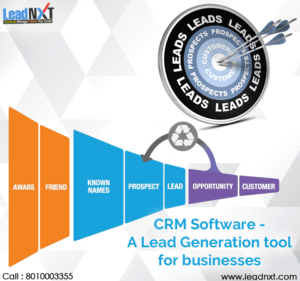
CRM Software – a Lead Generation Tool for Businesses
Currently, CRM is broadly implemented model for managing the business process. For every business, leads…

Affordable CRM Software for Indian SMEs
In today’s competitive market, customer experience defines business success. But for Indian SMEs (Small &…
LeadNXT Generate, Manage and Follow Your Leads
We have just moved telephony to the clouds!LeadNxt is designed for businesses of all sizes.…