Introduction: Customer Engagement Is Being Rewritten in 2026
By 2026, customer engagement is no longer about sending messages-it’s about creating real-time, automated, personalized conversations across channels. Customers expect instant replies, rich interactions, and seamless experiences whether they message, call, or tap a button.
To meet these expectations, businesses are rapidly adopting communication automation tools that combine AI, messaging platforms, voice technologies, and intelligent routing. These tools don’t just reduce workload-they increase conversions, retention, and customer satisfaction.
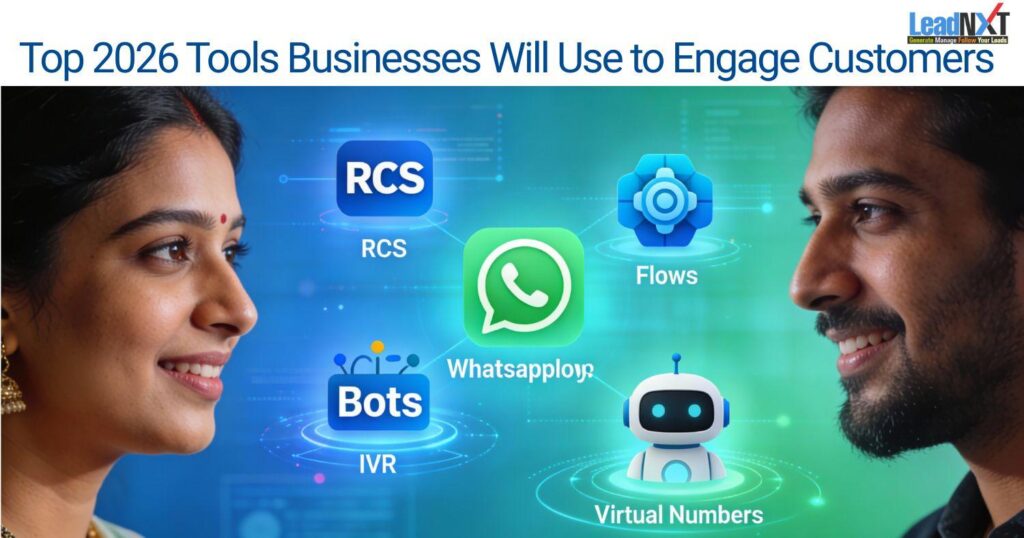
In this blog, we’ll explore the top four tools businesses will rely on in 2026 to engage customers at scale:
- RCS Messaging
- WhatsApp Flows
- Voice Bots
- Virtual Numbers
- RCS Messaging: The Future of Smart SMS
RCS (Rich Communication Services) is transforming traditional SMS into an interactive, app-like experience-without requiring customers to download anything.
Why RCS Is a Game-Changer in 2026
- Branded messages with logos and verified sender IDs
- Interactive buttons (Buy Now, Track Order, Call Support)
- Rich media support (images, carousels, videos)
- Read receipts and real-time engagement tracking
Use Cases
- Retail: Product catalogs inside messages
- Banking: Secure alerts with instant action buttons
- Healthcare: Appointment reminders with confirmation options
Business Impact
RCS delivers higher open rates and engagement than standard SMS, making it a powerful communication automation tool for customer journeys that require trust and interaction.
- WhatsApp Flows: Automated Journeys Inside Chat
WhatsApp Flows take automation to the next level by enabling structured workflows directly inside WhatsApp chats.
What Makes WhatsApp Flows Powerful
- Multi-step forms without leaving WhatsApp
- Automated lead qualification
- Integrated payments, bookings, and support
- Personalized responses using customer data
Popular 2026 Use Cases
- Lead generation with instant qualification
- Service booking and confirmations
- Order tracking and feedback collection
Why Businesses Love It
WhatsApp already has massive daily usage. By automating interactions within it, brands reduce friction and convert conversations into revenue-making it one of the most effective communication automation tools available.
- Voice Bots: AI-Powered Conversations at Scale
Voice bots are no longer robotic IVRs. In 2026, they are intelligent AI agents capable of understanding natural language, context, and intent.
Key Capabilities of Modern Voice Bots
- Natural language understanding (NLP)
- Multilingual support
- 24×7 call handling
- Seamless handoff to human agents
Common Business Applications
- Customer support and FAQs
- Appointment scheduling
- Payment reminders and confirmations
- Lead qualification calls
Business Benefits
- Reduced call center costs
- Faster response times
- Consistent customer experience
- Scalable communication automation
Voice bots enable businesses to handle thousands of calls simultaneously, making them essential communication automation tools in 2026.
- Virtual Numbers: Building Local Trust at Scale
Virtual numbers allow businesses to operate multiple phone numbers without physical SIM cards or devices.
Why Virtual Numbers Matter
- Create local presence across regions
- Route calls intelligently to teams or bots
- Track marketing campaign performance
- Enable call recording and analytics
2026 Use Cases
- Sales campaigns with region-specific numbers
- Customer support helplines
- Missed call lead generation
- Click-to-call integrations
Strategic Advantage
Virtual numbers act as the backbone of omnichannel communication, connecting voice bots, WhatsApp, RCS, and CRM systems into a single automated ecosystem.
How These Tools Work Together: The Omnichannel Advantage
In 2026, businesses won’t use these tools in isolation. The real power comes from integration:
- A lead clicks an ad → calls a virtual number
- A voice bot qualifies the lead
- Follow-up happens via WhatsApp Flow
- Order updates are sent via RCS
This interconnected system creates seamless customer journeys, driven by communication automation tools that work 24×7.
Why Communication Automation Tools Are Critical in 2026
Businesses adopting these tools gain:
- Higher conversion rates
- Faster response times
- Lower operational costs
- Better customer insights
- Scalable growth without increasing staff
Customers get:
- Instant responses
- Personalized experiences
- Channel flexibility
- Frictionless interactions
Conclusion: The New Standard of Customer Engagement
Customer engagement in 2026 is automated, intelligent, and omnichannel. Tools like RCS, WhatsApp Flows, Voice Bots, and Virtual Numbers are no longer optional-they are essential.
Businesses that invest early in communication automation tools will outperform competitors, build stronger relationships, and unlock sustainable growth.
If your brand wants to stay relevant in 2026 and beyond, now is the time to upgrade how you communicate.
FAQs: Communication Automation Tools in 2026
Q1. Are communication automation tools expensive to implement?
No. Most platforms offer scalable pricing, making them affordable for startups and enterprises alike.
Q2. Can these tools integrate with CRM and ERP systems?
Yes. Modern automation tools integrate seamlessly with CRM, ERP, and analytics platforms.
Q3. Which tool should businesses adopt first?
It depends on your audience. WhatsApp Flows and Virtual Numbers are usually the fastest to deploy.
Q4. Are voice bots suitable for small businesses?
Absolutely. AI voice bots help small teams handle large call volumes efficiently.
Q5. Will automation replace human agents?
No. Automation handles repetitive tasks, allowing human agents to focus on complex, high-value interactions.
Ready to modernize your customer engagement with the right communication automation tools?
2026 belongs to businesses that automate smartly.
Related Articles

10 WhatsApp API Use Cases for E-Commerce
10 WhatsApp API Use Cases for E-commerce to Boost Sales, Conversions & Customer Experience In…

WhatsApp Business API Trends for 2026
WhatsApp Business API Trends for 2026: What Indian Enterprises Must Know In 2026, WhatsApp Business…

Missed Call Alert Service with WhatsApp Notifications
Never Miss a Lead Again: 𝗟𝗲𝗮𝗱𝗡𝗫𝗧’𝘀 𝗠𝗶𝘀𝘀𝗲𝗱 𝗖𝗮𝗹𝗹 𝗔𝗹𝗲𝗿𝘁 𝗦𝗲𝗿𝘃𝗶𝗰𝗲 𝘄𝗶𝘁𝗵 𝗪𝗵𝗮𝘁𝘀𝗔𝗽𝗽 𝗡𝗼𝘁𝗶𝗳𝗶𝗰𝗮𝘁𝗶𝗼𝗻𝘀In today’s fast-paced…